
Almost everyone who wants to lose fat asks the same question: what is the best diet for fat loss? The internet offers hundreds of answers, from cutting out carbs to eating only once a day. Most of them are hard to follow for more than a few weeks.
The right diet matters because food is the biggest part of the fat loss puzzle. But the diet that works is not the strictest one. It is the one you can follow comfortably, week after week. Extreme dieting often leads to tiredness, cravings and giving up. Sustainable eating helps you build habits that last.
This guide explains what a practical diet for fat loss looks like, which foods to include, what to limit, and how to put it all together in daily life.
What Is the Best Diet for Fat Loss?
There is no single best diet that suits everyone. Your age, activity level, food preferences, culture, health conditions and daily routine all affect what will work for you.
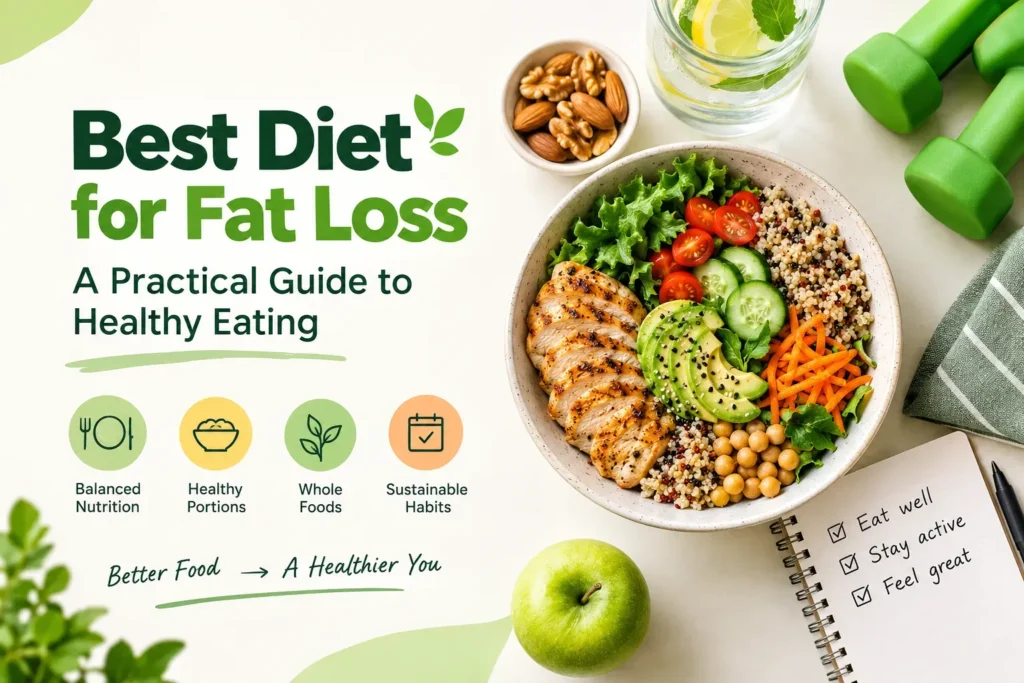
A practical, healthy diet for fat loss usually has three things in common:
- Balanced nutrition: meals include protein, fiber-rich foods, healthy fats and carbohydrates.
- Appropriate portions: you eat enough to feel satisfied, without regularly overeating.
- Habits you can maintain: the plan fits your kitchen, budget, schedule and taste.
If you can see yourself eating this way six months from now, you are on the right track.
How Does Diet Support Fat Loss?
Understanding Energy Balance
Your body uses energy (calories) every day for breathing, moving, digesting and thinking. Fat loss generally happens when you consistently take in a little less energy than your body uses. This does not mean starving yourself. Small, steady changes, like smaller portions of fried snacks or replacing sugary drinks with water, are easier to keep up than dramatic cuts.
Why Protein Matters
Protein helps you feel full for longer and supports your muscles. When you eat less, getting enough protein helps you keep your muscle mass while your body loses fat. Including a protein source in every meal is one of the simplest healthy eating for fat loss habits.
The Role of Fiber
Fiber is the part of plant foods that your body cannot fully digest. Foods rich in fiber, like vegetables, fruits, whole grains and legumes, add bulk to your meals, keep you full and support healthy digestion. This can make it easier to avoid unnecessary snacking.
Why Portion Control Is Important
Even healthy foods add up in calories. Nuts, ghee, rice and fruit juices are nutritious, but large portions can slow down your progress. Portion control does not mean weighing every bite. Simple tricks like using a smaller plate, serving food in the kitchen instead of at the table, and eating slowly can help a lot.
Why Portion Control Is Important
If you are searching for the best foods for fat loss, focus on whole, minimally processed foods that keep you full and give you steady energy.
Protein-Rich Foods
- Eggs: easy to cook and versatile.
- Dal and legumes: moong, masoor, chana, rajma and chole are affordable sources of protein and fiber.
- Paneer and curd: good options for vegetarians. Choose plain curd over sweetened versions.
- Fish or lean meats, if included in your diet: grilled, steamed or lightly cooked options work well.
High-Fiber Foods
- Vegetables: leafy greens, cucumber, carrot, beans, gourds, cauliflower and more. Try to fill half your plate with them.
- Fruits: whole fruits like apple, guava, papaya and berries are better than fruit juices because they keep their fiber.
- Whole grains: oats, brown rice, millets (ragi, jowar, bajra) and whole wheat roti.
- Legumes: they count as both protein and fiber, which makes them a great value food.
Healthy Sources of Dietary Fat
Fat is not the enemy. Your body needs it for energy and for absorbing certain vitamins. Choose:
- Nuts like almonds and walnuts
- Seeds like flax, chia, pumpkin and sunflower
- Avocado
- Other minimally processed sources such as cold-pressed oils and a small amount of ghee
Just keep portions moderate, as these foods are calorie-dense.
Foods to Limit When Trying to Lose Fat
Instead of labelling foods as “bad,” it is more helpful to think about what to limit. You do not need to ban your favourite foods completely. Eating them less often and in smaller portions is usually more realistic.
Highly Processed Foods
Packaged snacks, instant noodles, bakery items and many ready-to-eat foods are often high in refined flour, sugar, salt and unhealthy fats, and they do not keep you full for long.
Sugary Drinks
Soft drinks, packaged juices, sweetened lassi and sugary chai can add many calories without making you feel full. Water, buttermilk, nimbu pani without much sugar, or unsweetened herbal teas are better choices.
Excessively Calorie-Dense Snacks
Chips, namkeen, deep-fried snacks and sweets are easy to overeat. Keep them as occasional treats, and try roasted chana, makhana, fruit or a handful of nuts as everyday snacks.
Frequent Large Portions
Eating very large meals often, even of healthy food, can make it harder to make progress. Try serving a moderate portion first and waiting a few minutes before taking more.
How to Build a Simple Fat Loss Meal
You do not need a complicated meal plan. Use this simple formula for most meals:
Protein + Vegetables/Fruit + Whole-Grain or Other Carbohydrate + Healthy Fat
For example: dal (protein) + sabzi and salad (vegetables) + one or two rotis (whole grain) + a small spoon of ghee or a few nuts (healthy fat).
Following this pattern helps your meals stay balanced, filling and satisfying, which is the heart of any best diet plan for fat loss.
Sample Healthy Day of Eating for Fat Loss
Breakfast
Vegetable poha or besan chilla with mint chutney, plus a cup of curd. Vegetable oats or 2 boiled eggs with fruit are also good options.
Mid-Morning Option
One whole fruit (like apple or guava) or a small handful of nuts. A cup of unsweetened herbal tea or water also works.
Lunch
A plate with dal, a serving of seasonal sabzi, a large salad, and one or two whole-wheat rotis or a small portion of brown rice.
Evening Snack
Roasted chana, makhana, sprouts salad or a small bowl of fruit. Choose something with protein or fiber so you are not hungry before dinner.
Dinner
Something light and simple, like paneer or vegetable sabzi with one roti and salad, or a bowl of moong dal khichdi with vegetables. Try to eat dinner a couple of hours before bedtime.
Practical Tips for Following a Fat Loss Diet
Plan Your Meals
Decide what you will eat for the next day or the coming week. Planning reduces last-minute unhealthy choices, especially on busy days.
Prioritize Protein and Fiber
Before you finish building a meal, ask yourself: does it have a protein source and some vegetables or fiber? This one habit does a lot.
Drink Enough Water
Sometimes thirst feels like hunger. Keep a water bottle nearby and sip through the day. Unsweetened herbal teas can also be a comforting, calorie-free option.
Pay Attention to Portions
Eat slowly, stop when you feel comfortably full, and avoid eating while watching TV or scrolling on your phone.
Focus on Consistency
One perfect day does not matter much, and one off day does not ruin your progress. What matters is what you do most days.
One perfect day does not matter much, and one off day does not ruin your progress. What matters is what you do most days.
Common Fat Loss Diet Mistakes
Following Extremely Restrictive Diets
Very low-calorie or “one food only” diets are hard to sustain and can leave you tired and craving food. When the diet ends, old habits often return.
Skipping Meals to Compensate
Skipping breakfast or lunch after a heavy meal can lead to intense hunger later and overeating at night. Regular, balanced meals are usually more helpful.
Depending on One "Fat-Burning" Food
No single food, drink or supplement can melt fat on its own. Foods like lemon water, jeera water or green tea can be part of a healthy routine, but they work best alongside a balanced diet, movement and good sleep.
Ignoring Overall Eating Patterns
What you eat regularly matters more than what you eat once in a while. Look at your overall week, including snacks, drinks and late-night eating, instead of judging a single meal.
Where Ayurvedic Herbal Tea Can Fit In
Many people like to add a warm cup of Ayurvedic herbal tea to their day as a replacement for sugary chai or evening snacking. Herbal teas are not a shortcut or a replacement for good food and an active lifestyle, but they can be a pleasant habit that supports a healthy routine. If you want to learn more about the traditional side of wellness, you can read our guide on Ayurvedic weight management or explore ways to improve digestion naturally with everyday habits. You can also find more natural digestion tips on our blog.
Frequently Asked Questions About Fat Loss Diets
What is the best diet for fat loss?
There is no single best diet for everyone. The most effective approach is usually a balanced diet with enough protein and fiber, sensible portions, and foods you enjoy and can follow long term.
What foods should I eat for fat loss?
Focus on protein-rich foods (eggs, dal, paneer, curd, fish or lean meats), high-fiber foods (vegetables, fruits, whole grains, legumes), and moderate amounts of healthy fats like nuts and seeds.
Can I eat carbohydrates while trying to lose fat?
Yes. Carbohydrates are a normal part of a healthy diet. Choose fiber-rich options like whole grains, millets, fruits and legumes, and watch portion sizes.
How important is protein in a fat loss diet?
Protein is very helpful. It keeps you full for longer and supports your muscles. Try to include a protein source in each main meal.
Is portion control important for fat loss?
Yes. Even healthy foods contain calories. Being mindful of portions helps you enjoy a variety of foods without overeating.
Conclusion
The best diet for fat loss is not about extreme rules or giving up your favourite foods. It is about building balanced meals, eating sensible portions and choosing habits you can keep for the long term. Start small: add more vegetables, include protein in every meal, cut down on sugary drinks, and stay consistent. Over time, these simple steps add up to healthier eating and better results.
Disclaimer: This article is for general information only and is not medical advice. If you have a health condition, are pregnant or breastfeeding, or take regular medication, please consult a doctor or qualified dietitian before changing your diet.